Attic Mold Removal · Warren

Attic Mold Removal in Warren, MI

See dark staining across your roof boards or frost on the wood up top? We clear attic mold and fix the airflow that feeds it.

1-2 days installs · typical timeline
Free Quote

Free Attic Mold Removal quote.

We reply within 1 business hour. No spam, ever.

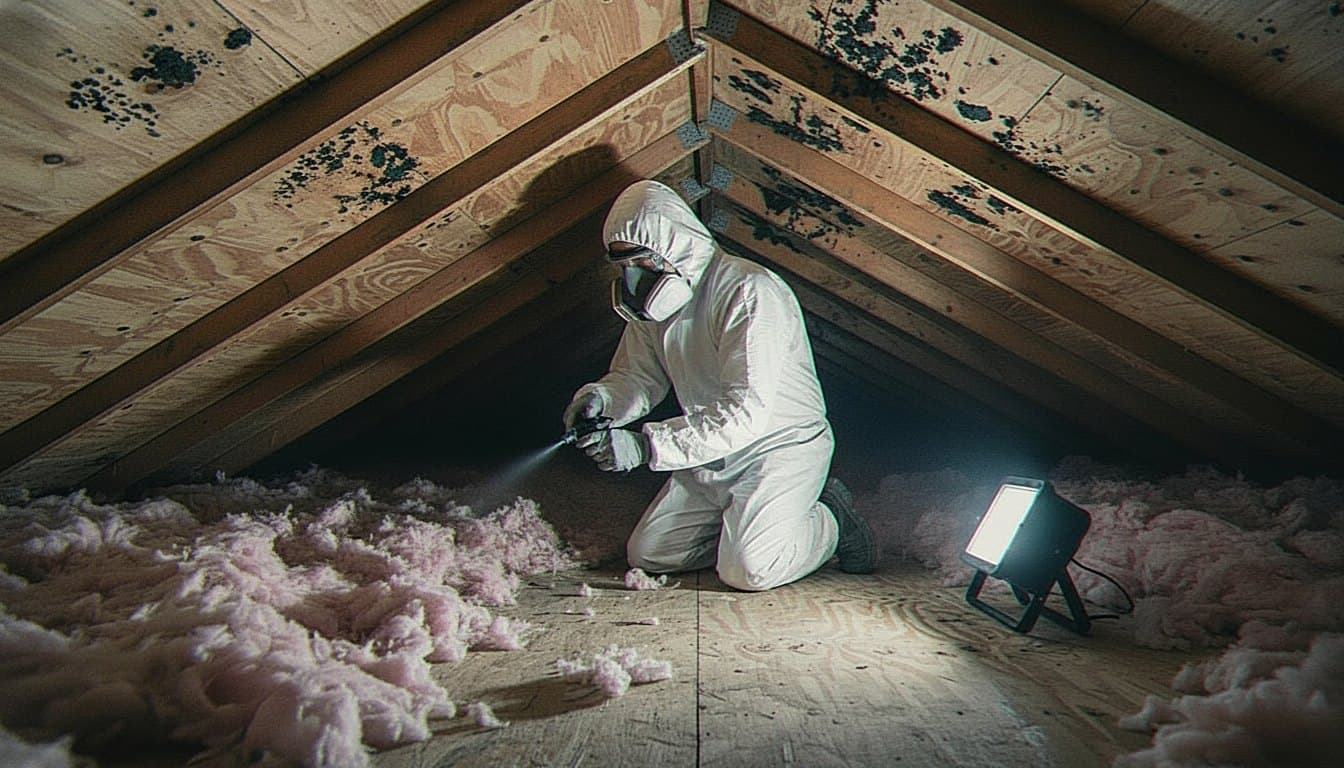
Technician treating mold on attic roof sheathing
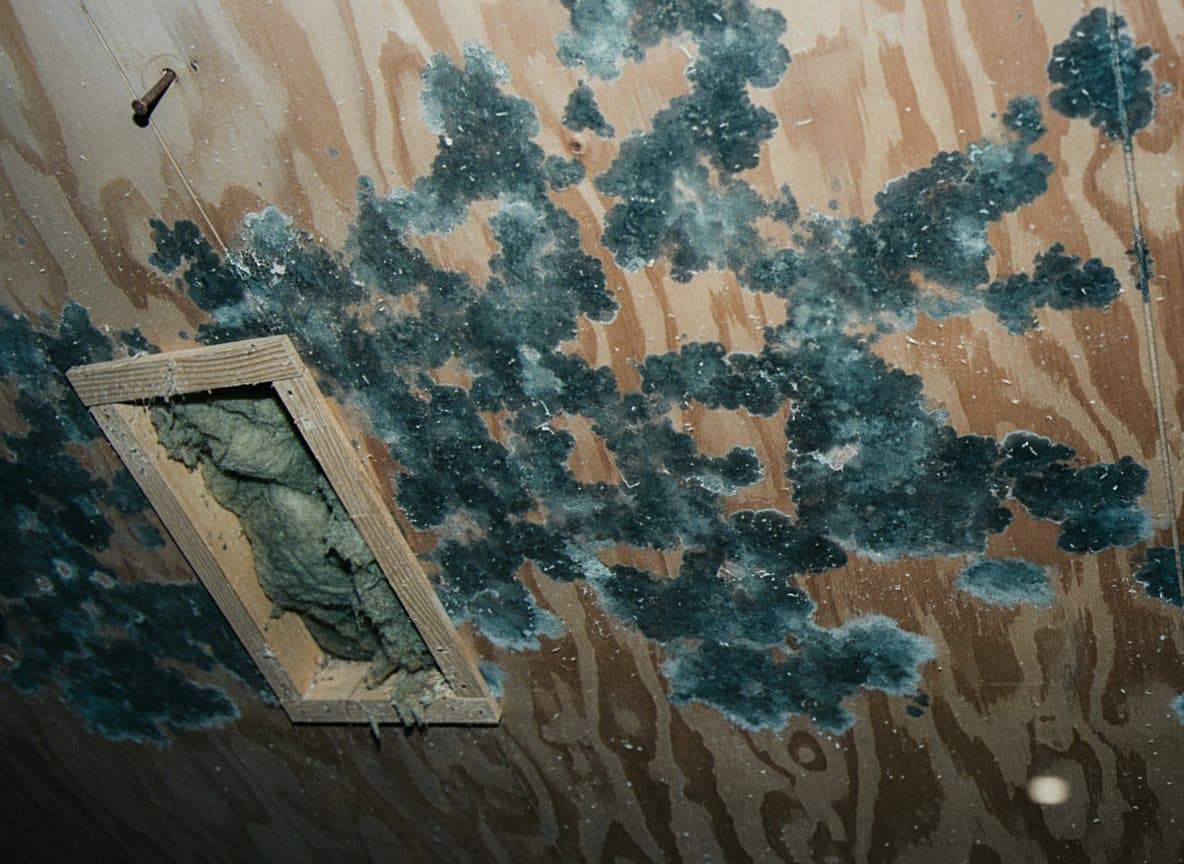
Dark mold growth across attic roof decking
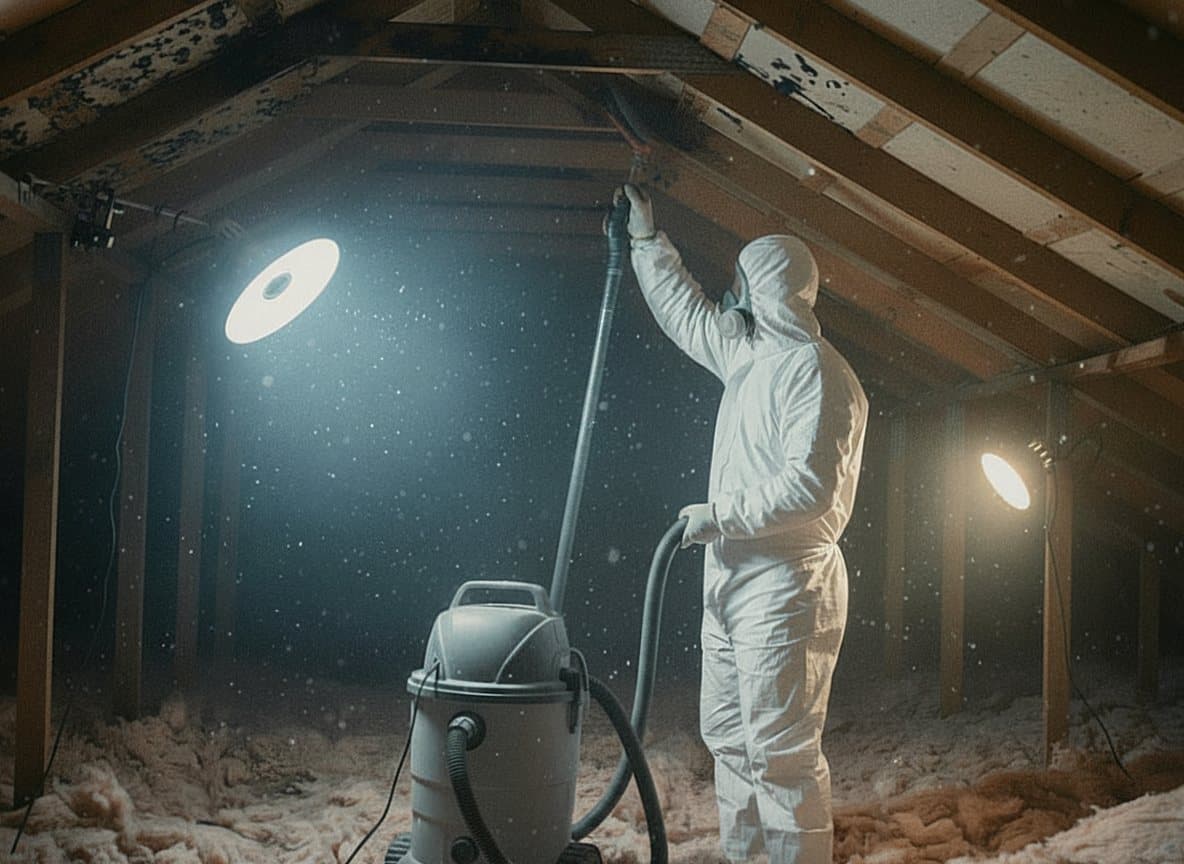
Technician removing mold from attic rafters
What we install

We clear attic mold and fix the airflow

Attic mold removal in Warren often begins with a surprise. A roofer heads up to check a leak, or a buyer's inspector pokes a head through the hatch, and there it is. Dark, spotty staining spreads across the underside of the roof boards, and the wood smells damp and sour. Most homeowners never set foot up there, so the growth can build for years before anyone notices. The good news is that attic mold has a clear cause, and once we find it, we can clear it. If you are not sure what you are looking at, our mold inspection and testing step can confirm it first.

Real attic mold removal follows a careful order, and the attic adds a twist. We seal off the hatch and run negative air, so spores do not drift down into the rooms below while we work. A HEPA scrubber cleans the air the whole time. Most of the time the roof boards and rafters stay, since you cannot just rip out the deck that holds your roof up. So we clean the wood instead. The growth gets HEPA vacuumed, then scrubbed or treated with an antimicrobial until the surface is sound again. Last, and this is the part that matters most, we fix the airflow that let the mold grow. We follow IICRC and EPA guidelines on every step.

  • We seal the hatch first so spores never drift into the rooms below.
  • HEPA scrubbers and negative air keep the rest of your home clean.
  • We clean the attic mold off the roof boards and rafters instead of tearing out your deck.
  • We open blocked soffit vents and add baffles to get the air moving.
  • We point bath and kitchen fans outside, not up into the attic.
A clean roof board means nothing if the air up there stays damp. Attic mold lives on that trapped moisture, so we fix the airflow first.

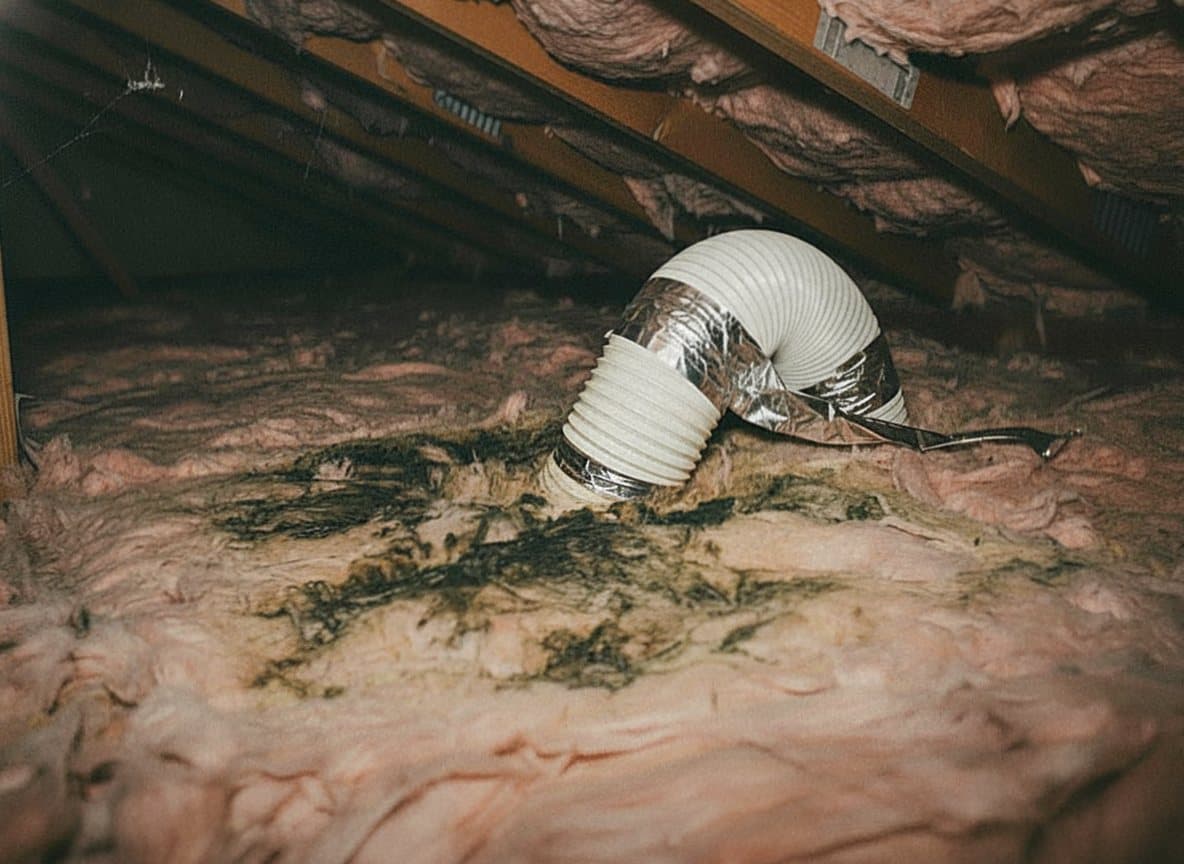
Warren attics take a beating from Michigan weather. The roof is usually the culprit. In winter, warm damp air from the house drifts up into a cold attic and freezes into a layer of frost on the underside of the roof boards. When it thaws, the wood gets wet, and attic mold takes hold. Ice matters too. It piles up at the eaves and pushes melt under the shingles, which soaks the deck from above. Then there are the vents. Many older Warren homes have insulation packed right over the soffits, so the air never moves, and a bath fan venting into the attic just adds more damp. We see this same story in Macomb County homes all winter long, so we fix the airflow, not only the stain.

See attic mold on your roof boards or smell something damp up top? Call us today for a free inspection, and we will tell you straight what you are facing.
Materials

What good attic mold removal looks like

Good attic mold removal is more about method than any single product. Containment is everything. We seal the hatch and run negative air, so the attic stays under lower pressure and nothing drifts down into the rooms below while we work the wood. HEPA filters trap the loose spores. The roof deck stays. Because you cannot rip out the boards that hold your roof up, we clean them right in place, vacuum them with a HEPA unit, then hand scrub or treat the wood with an antimicrobial made for mold until the staining lifts.

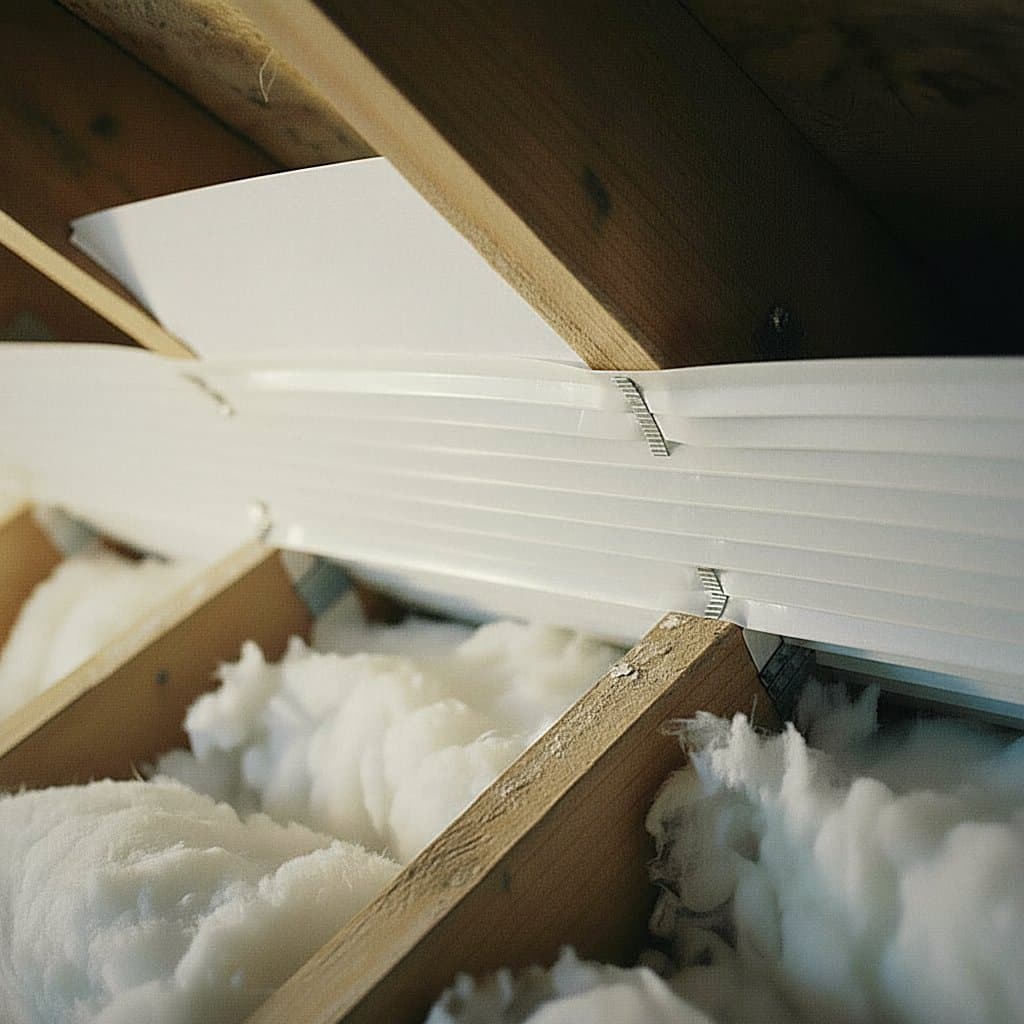
The other half of the job is the part most crews skip. It is airflow. Attic mold lives on trapped moisture, so cleaning the wood alone is only half of a real fix. We open the blocked soffit vents and slide in baffles, which stop the insulation from choking the airflow down at the eaves. We point every bath and kitchen fan outside, not up into the attic. Bleach is the classic mistake, since it turns the stain pale but leaves the wood damp and the roots alive. Clean wood plus moving air is the only real cure.

  • Negative air and HEPA scrubbers that keep spores out of the rooms below
  • Soffit baffles and clear vents that get the attic air moving again
  • Bath and kitchen fans routed outside, so the moisture leaves the house
Mold around a blocked attic soffit vent
Soffit baffle installed to restore attic airflow
What about the alternatives?

Attic mold removal versus the quick fixes

Plenty of fixes promise an easy win over attic mold, and most skip the airflow that caused it. Here is how the common ones stack up for a Warren home. That way you spend once and get a fix that lasts.

Bleach on the sheathing

Bleach lightens the stain, but it soaks the boards and leaves the living roots alive deep in the grain. The mark fades for a week or two. Then the mold creeps right back the next damp winter.

Skip

Paint or a sealer

A coat of stain blocking paint hides the marks for a season. It seals the damp right inside the wood, and that trapped moisture just feeds more growth behind the fresh coat.

Skip

Clean it but skip the vents

Scrubbing the wood clears what you can see. It feels like progress. Leave the blocked vents and the fan dumping inside, though, and the mold is back by next winter.

Acceptable

A general handyman

A handyman can scrub a board or two. Most are not set up for containment or the airflow work that a real attic job needs from start to finish.

Acceptable

Cleaning plus a ventilation fix

We contain the space, clean the wood, treat what stays, and open the airflow so the whole attic dries out for good. The mold is gone. The cause is fixed, so it stays gone.

Recommended
How it goes

From quote to walk-on, fast.

01

Free inspection

02

Contain the area

03

Remove and treat

04

Dry and verify

Before you book

Common worries about attic mold, answered

Attic mold is easy to ignore since you rarely go up there, but it is worth understanding. Here are the questions we hear most before we start.

How did mold get in my attic if there is no plumbing up there?
No plumbing needed. Attic mold almost never comes from a pipe, and it surprises a lot of people. It comes from damp air and poor airflow instead. Warm, moist air from your kitchen, bath, and laundry rises into the attic, and if the vents are blocked it has nowhere to go. In a cold Michigan winter that damp air turns to frost on the roof boards, then wets the wood when it thaws. Add a bath fan that dumps into the attic, and the mold has all the water it needs.
Do you have to replace my roof to get rid of the mold?
Almost never. The roof deck and rafters usually stay right where they are, since the mold grows on the surface of the wood and not through it. We clean and treat the boards in place. A new roof only enters the picture if a long leak has actually rotted the wood, which is a separate repair. Most of the time we clean what is there and fix the airflow.
How long does attic mold removal take?
Most attic jobs in a Warren home wrap up in a day or two. A small patch near one vent goes quick. A whole attic, or one tied to a roof leak, runs longer, since we clean every board and sort out the airflow before we call it done.
Will the mold just come back after you leave?
Not if the airflow gets fixed, and that is the part we never skip. Mold needs damp, still air to live, so once the vents are clear and the fans point outside, the attic dries out and stays that way. If we only cleaned the wood and left the air trapped, it would come back by next winter. Fixing the cause is the whole point of the job.
Aftercare

Keeping attic mold from coming back

Once the attic mold is gone and the airflow is fixed, a few simple checks keep it that way. The idea is easy. Attic mold feeds on trapped, damp air, so the goal is to keep the air moving and keep the moisture out. That matters most through a cold Warren winter, when warm household air drifts up and meets the cold roof boards above. A quick look up there once or twice a year catches trouble early, long before the wood ever starts to stain again.

  • Check that the soffit and ridge vents stay clear, never packed tight with insulation
  • Vent every bath and kitchen fan outside
  • Before winter, clear the gutters and knock down ice at the eaves so melt cannot back up under the shingles
  • Peek into the attic once or twice a year
  • Fix any roof leak fast, since wet wood grows mold within a day or two
Close-up of mold on attic roof sheathing
FAQ

Attic mold questions Warren homeowners ask

Is black mold dangerous to my family's health, and what are the symptoms?
Black mold can stir up symptoms you might blame on a cold. Think a stuffy nose, a nagging cough, itchy eyes, or a throat that feels scratchy for no clear reason. Some people barely notice. Folks with asthma or allergies tend to feel it the most, and that is who we worry about first when we walk a home. We are mold pros, not doctors, so if anyone feels truly sick, please see a doctor while we clear the mold and dry the source.
How do you know if it is really toxic black mold or just regular mildew?
You often cannot tell black mold from plain mildew by sight, and that is the honest truth. Mildew is flat. It sits gray on a hard surface and wipes right off with a rag. The darker stuff people call toxic looks almost slimy, and it keeps coming back no matter how often you scrub. The only way to name the species is a lab test of an air or surface sample, so we would rather test and know than guess and tear out a wall you could have kept.
Do I need a mold test, or can you just remove what you can see?
It depends on what you are facing. When the mold is out in the open and the cause is plain to see, we can often scope the work by eye and skip the lab fee. A test earns its place when a musty smell has no visible source, when you want proof for a home sale, or when an insurer asks for paperwork. We would rather test and know than rip out a wall on a hunch. Spend on the fix, not on guesswork.
How much does a mold inspection cost and what does the report tell me?
We will not quote a price here, because every space is different and a fair number comes from seeing it first. Here is what you get. The report names the mold the lab found, shows how the air inside compares to the air outside, and marks every spot where we found moisture and growth. It tells you whether you have a real problem, how big it is, and what to do next. Plain words you can act on.
Why does mold keep coming back in my basement after I clean it?
Because the cleaning never touched the real cause. Mold is not the problem itself. It is a sign of water, and a basement gives it plenty, whether from a damp wall, a tired sump pump, or humid air that pools low and never dries out. Wipe the surface and the spores you cannot see stay put, then bloom again the moment the next damp spell rolls in. We find the water first, stop it, and only then clear the growth, which is the only way it stays gone.
Ready when you are

Ready for a real Warren floor?

Send a few photos or book a free 15-minute on-site walk-through. A fixed written quote within one business day.

Get a free quoteCall (586) 474-5359
CallFree Quote